Blog

  • Jhumkis for Every Occasion: A Practical Guide

    Jhumkis for Every Occasion: A Practical Guide

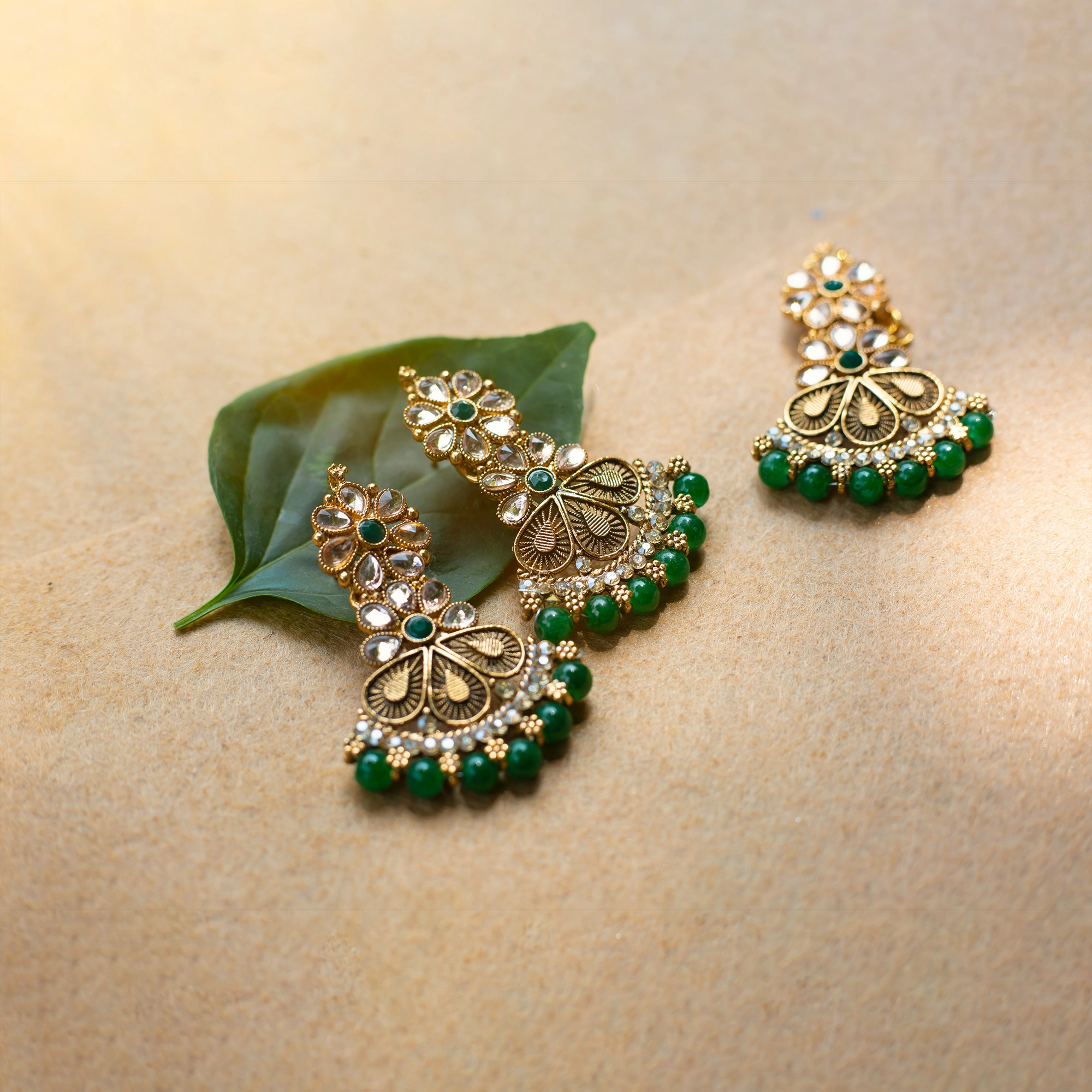
    The jhumki is the most versatile piece in Indian jewellery, and it is the one people most often restrict to weddings for no good reason. The bell shape is centuries old and it works with a bridal lehenga, with a kurta, and — genuinely — with a plain white shirt and jeans.

    Size changes everything

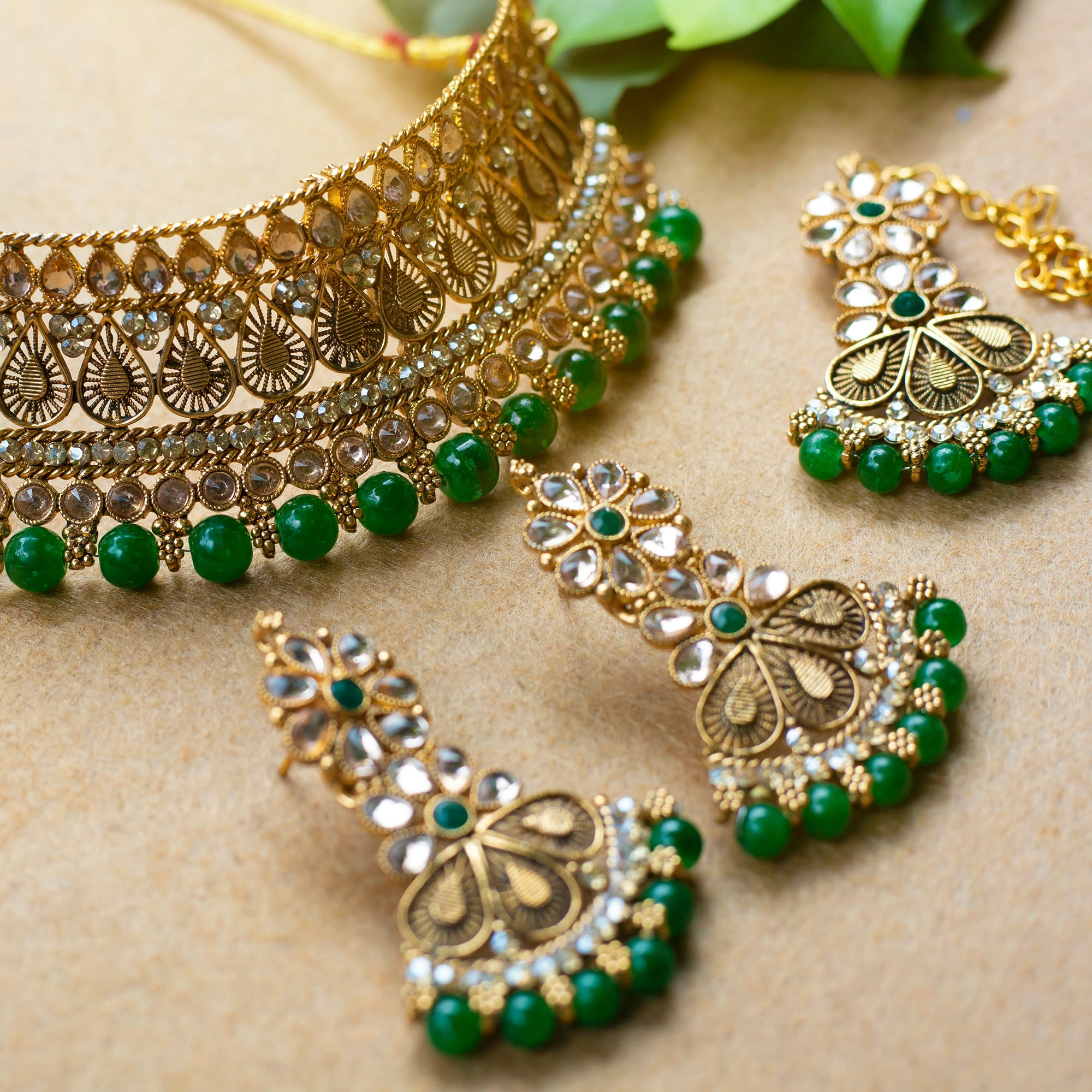
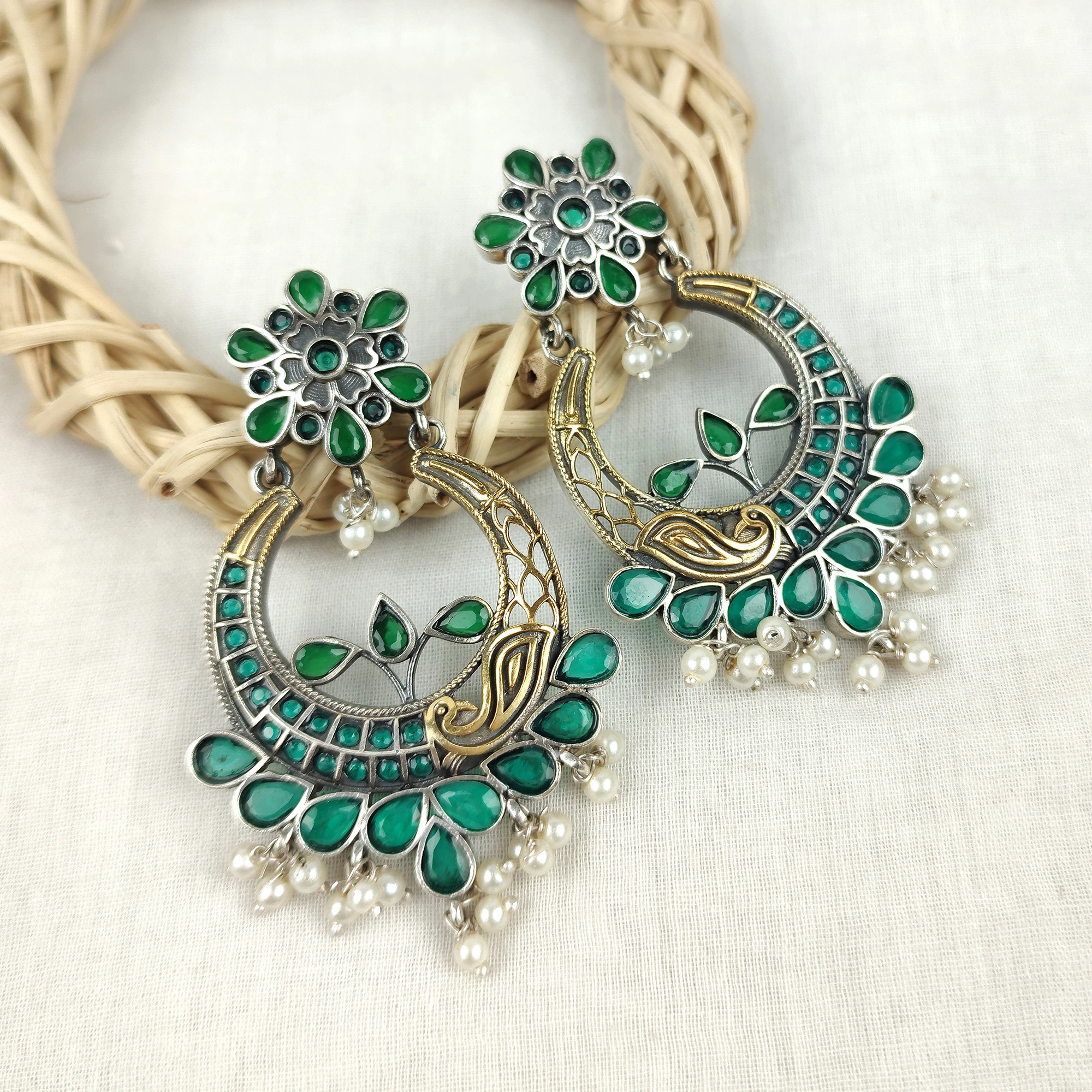
    A small jhumki, no bigger than the earlobe, is an everyday earring. It reads as texture rather than statement, and it goes anywhere. A mid-size jhumki that clears the jaw is a festive earring — dinners, functions, anything where you have made an effort. A large chandelier jhumki that reaches the shoulder is bridal, and it is not pretending otherwise.

    Most people own the third kind and none of the first. That is why the jhumki gets a reputation for being impractical. It is not the shape that limits you; it is the scale.

    The weight problem, and the fix

    Large jhumkis are heavy, and the weight hangs from a piercing that is not designed to carry it. Over a long day this genuinely hurts, and over years it stretches the piercing — which is not reversible without a procedure.

    The fix is the ear chain, or sahara: a fine chain that runs from the earring up to a hook in the hair, taking most of the load off the lobe. It is not decorative, or not only decorative. If you are wearing heavy jhumkis for more than an hour or two, use one.

    • Ask about the weight before you buy — pick the piece up, do not just look at it.
    • Hollow construction gives you the size without the full weight. Ask which pieces are hollow.
    • Screw backs hold better than push backs for anything substantial, and they are far less likely to end with you crawling under a table.
    • If your lobes are already stretched or sore, say so. There are lighter options and there are supports.

    Wearing jhumkis outside a wedding

    The trick is to let the jhumki be the only ornate thing you have on. Small gold jhumkis with a linen shirt work because nothing else is asking for attention. The same earrings with a heavily worked outfit, bangles, and rings become one detail among many and lose their effect.

    Pearl and plain gold jhumkis are the easiest starting point if you have only ever worn them at functions. They read as classic rather than festive, and they will not feel like a costume on a Tuesday.

    Hair matters more than you expect

    Hair down covers a jhumki, and a large one will tangle. If you are wearing something substantial, hair up or swept to one side lets it be seen and stops it catching. This sounds obvious and it is routinely forgotten until the earring is already in.

    Come and try

    Chura, nath, jhumkis and haars are all pieces that reward being seen in person — the weight, the drape, the way the stones catch the light. You are welcome to come try things on at either of our boutiques: Langford in Victoria, BC (250-710-4013) or Langley, BC (778-903-7979). Call ahead if you would like us to set pieces aside for you.

  • Styling the Rani Haar: From Ceremony to Reception

    Styling the Rani Haar: From Ceremony to Reception

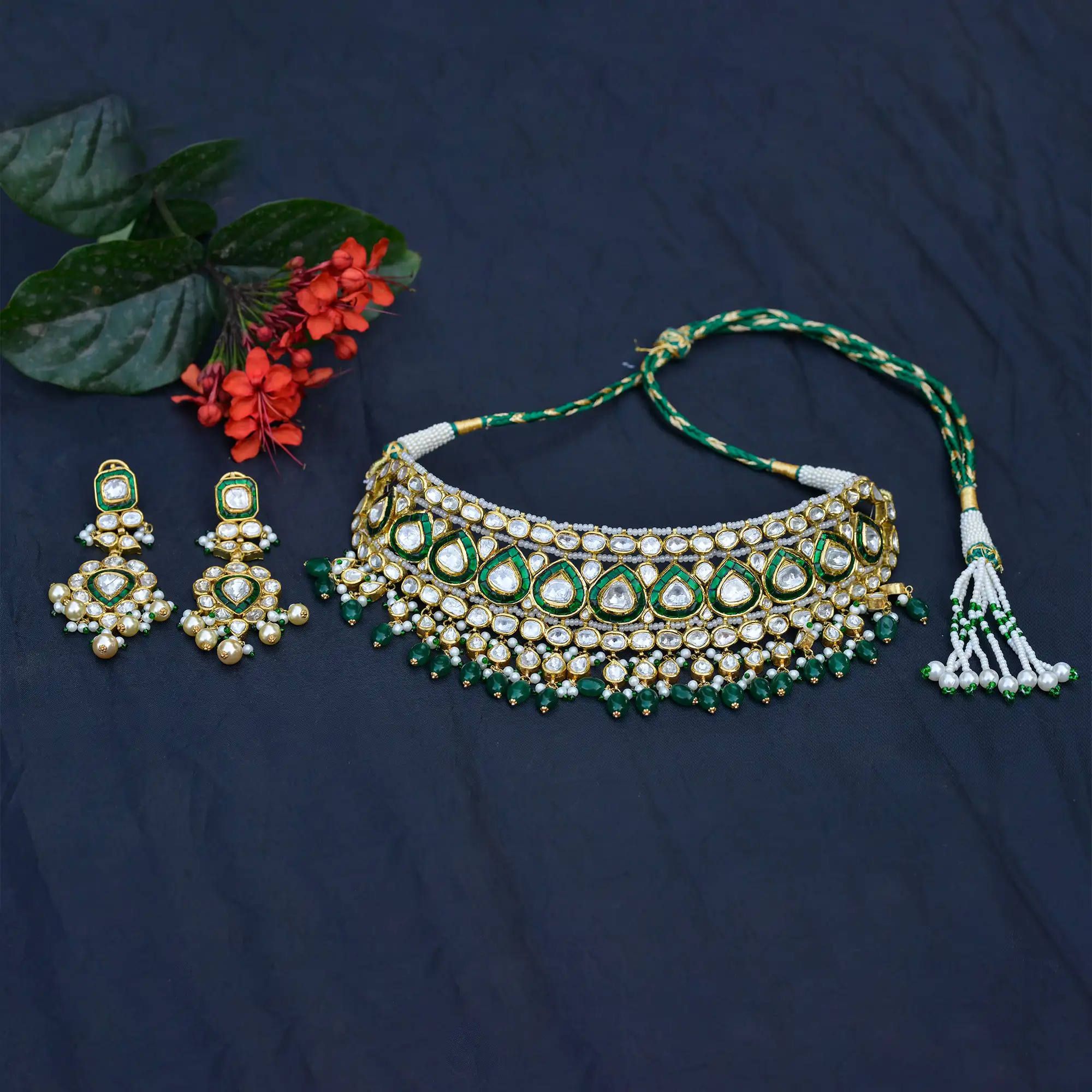
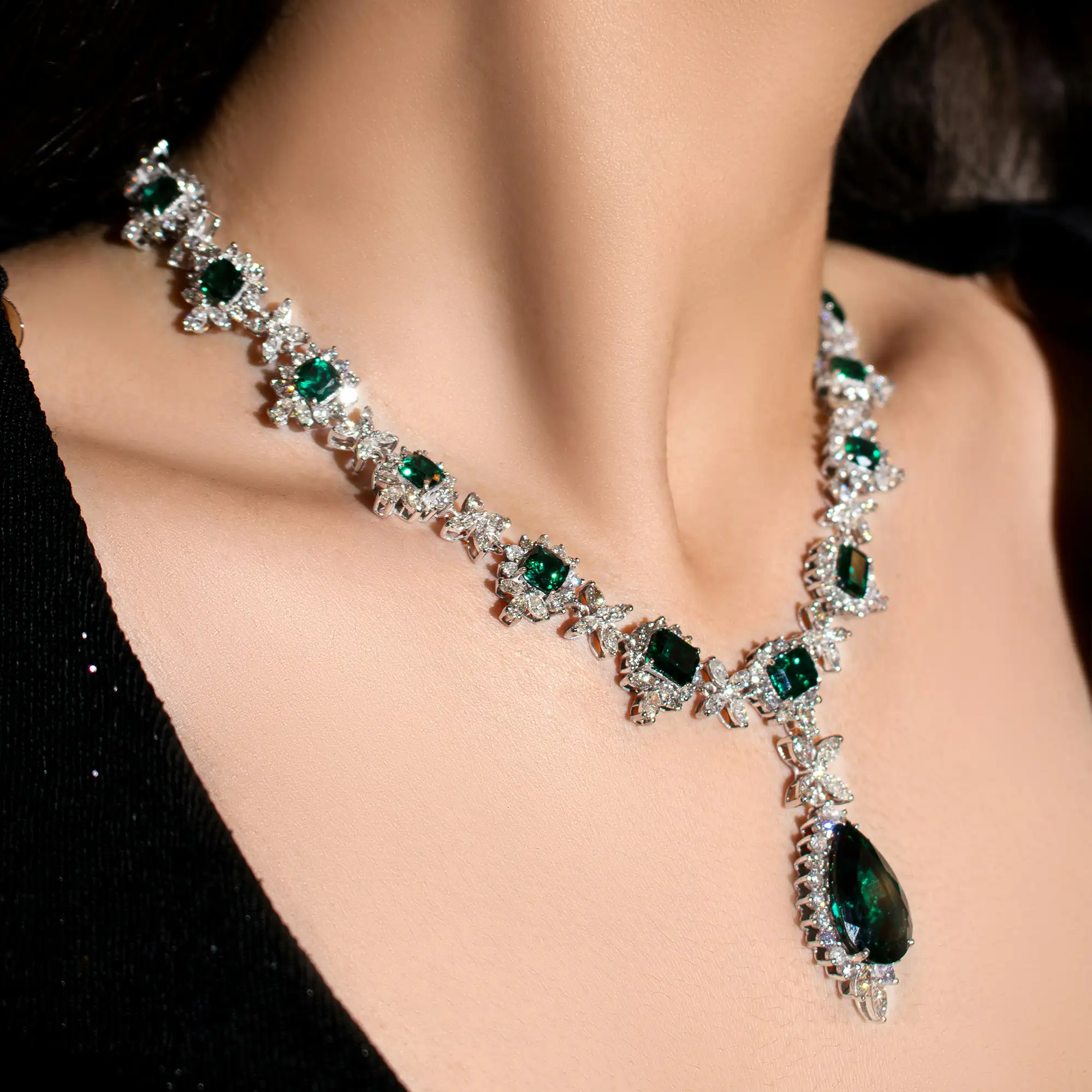
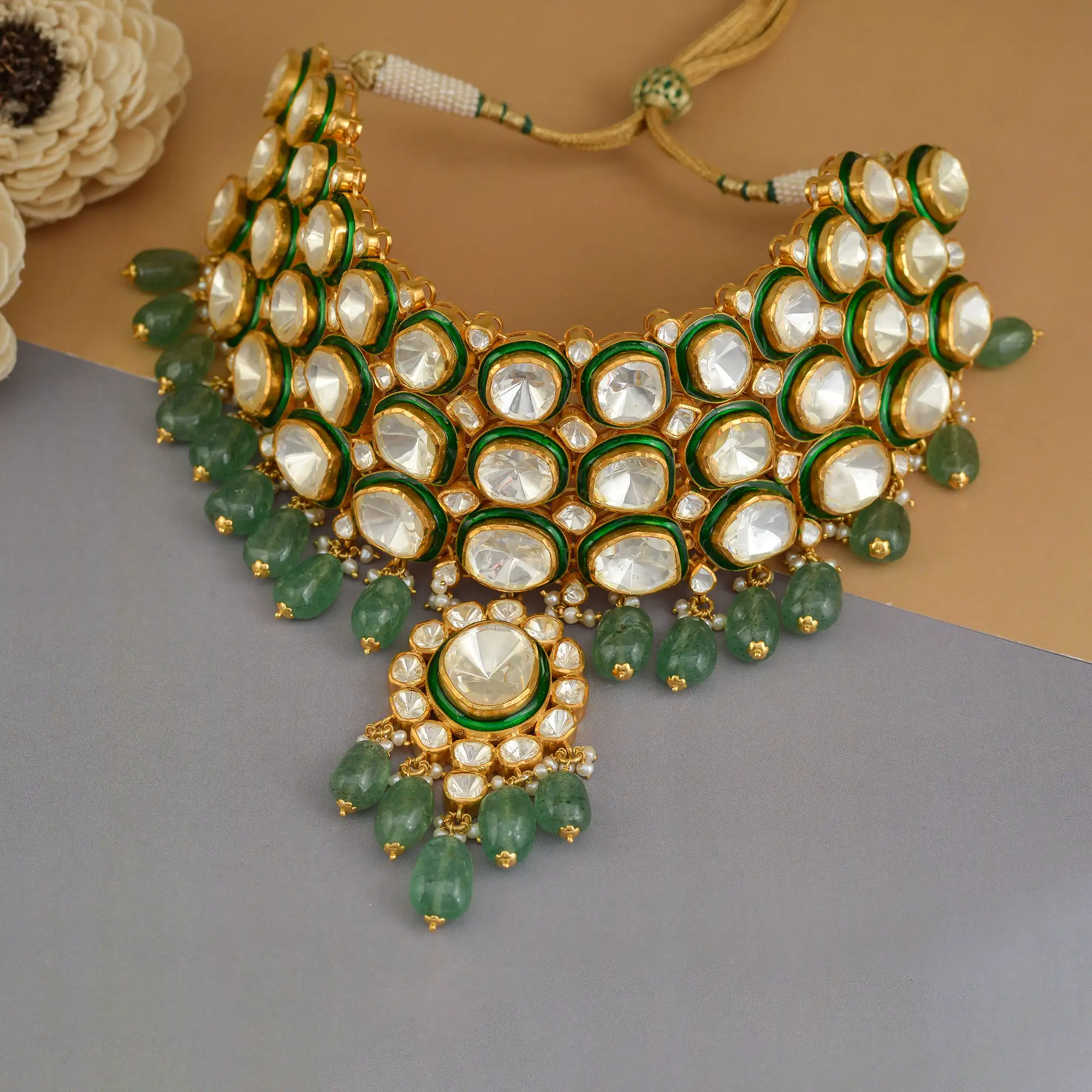
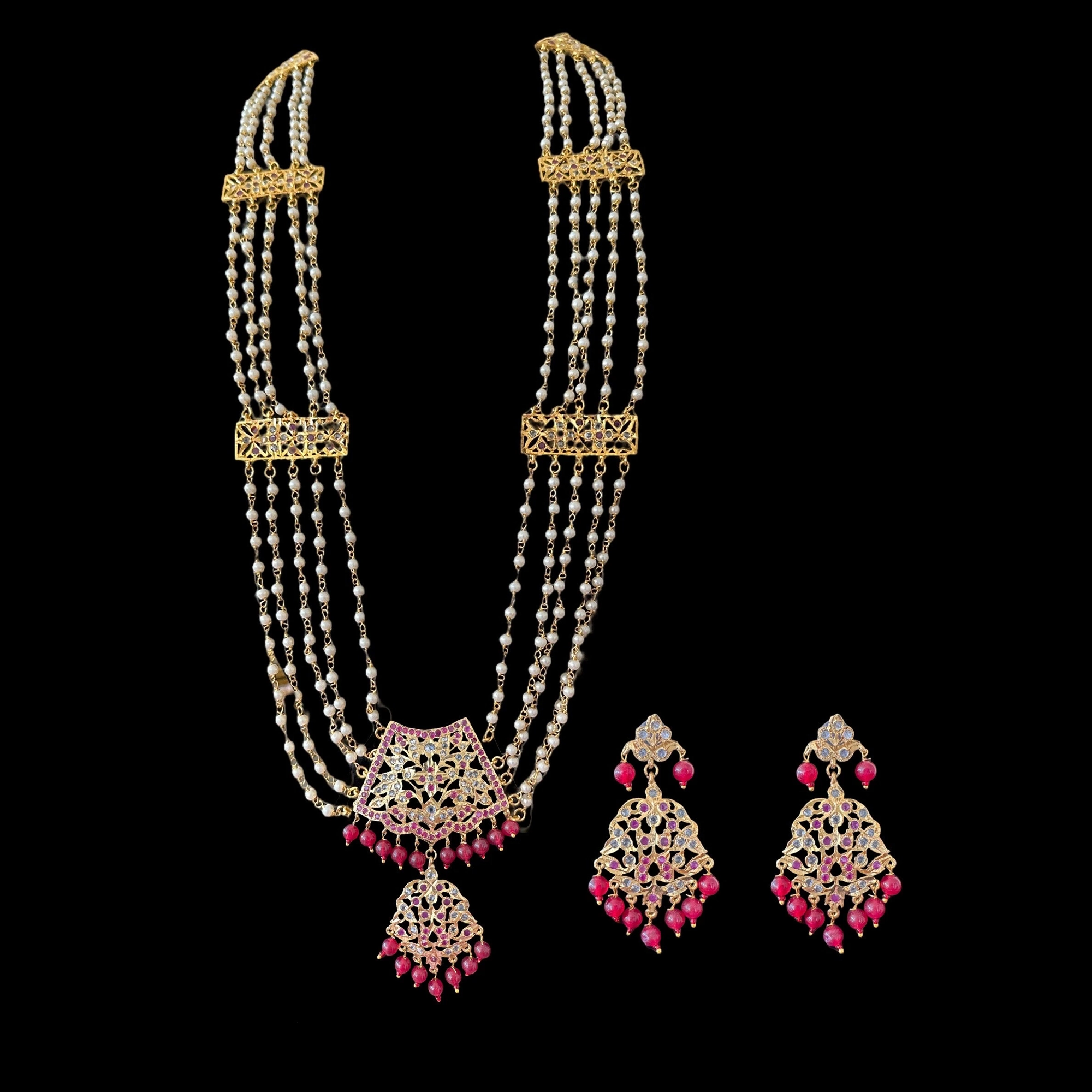
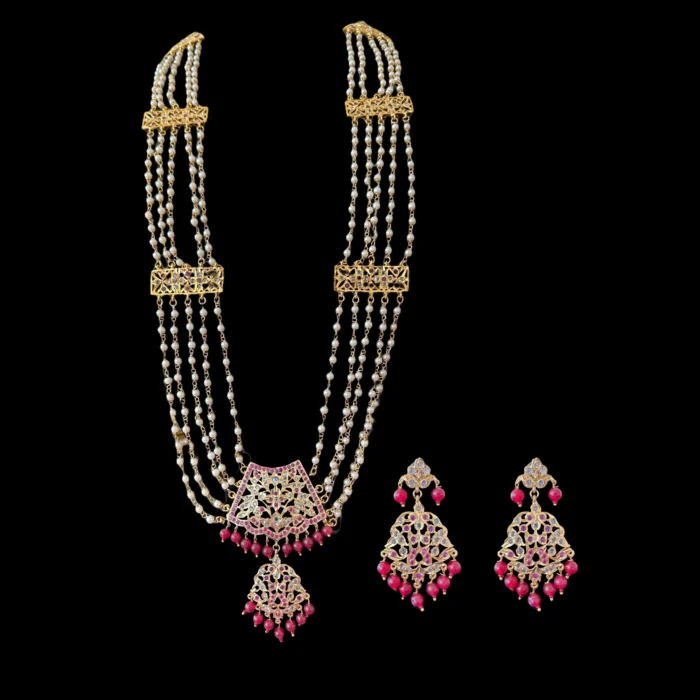
    The rani haar is a statement by definition. It is long, it is layered, and it was never designed to be subtle. Worn well it is the most striking thing in the room. Worn carelessly it fights your outfit and wins.

    Start with the neckline, not the necklace

    This is the part that gets reversed most often. People choose the haar first and then wonder why it sits oddly. The neckline of your blouse decides what will work, and it decides it before you have looked at a single piece.

    • Deep or V necklines — the most accommodating. A long haar follows the line of the opening and the two reinforce each other.
    • Round or boat necks — the haar has to clear the fabric or it will bunch against it. Longer works better than shorter here.
    • High or closed necks — a haar worn over fabric reads very differently than one worn against skin. It can look wonderful, but it is a deliberate choice rather than a default.
    • Halter or one-shoulder — asymmetry plus a heavy symmetrical haar is a hard balance. Possible, but try it before you commit.

    Layering without clutter

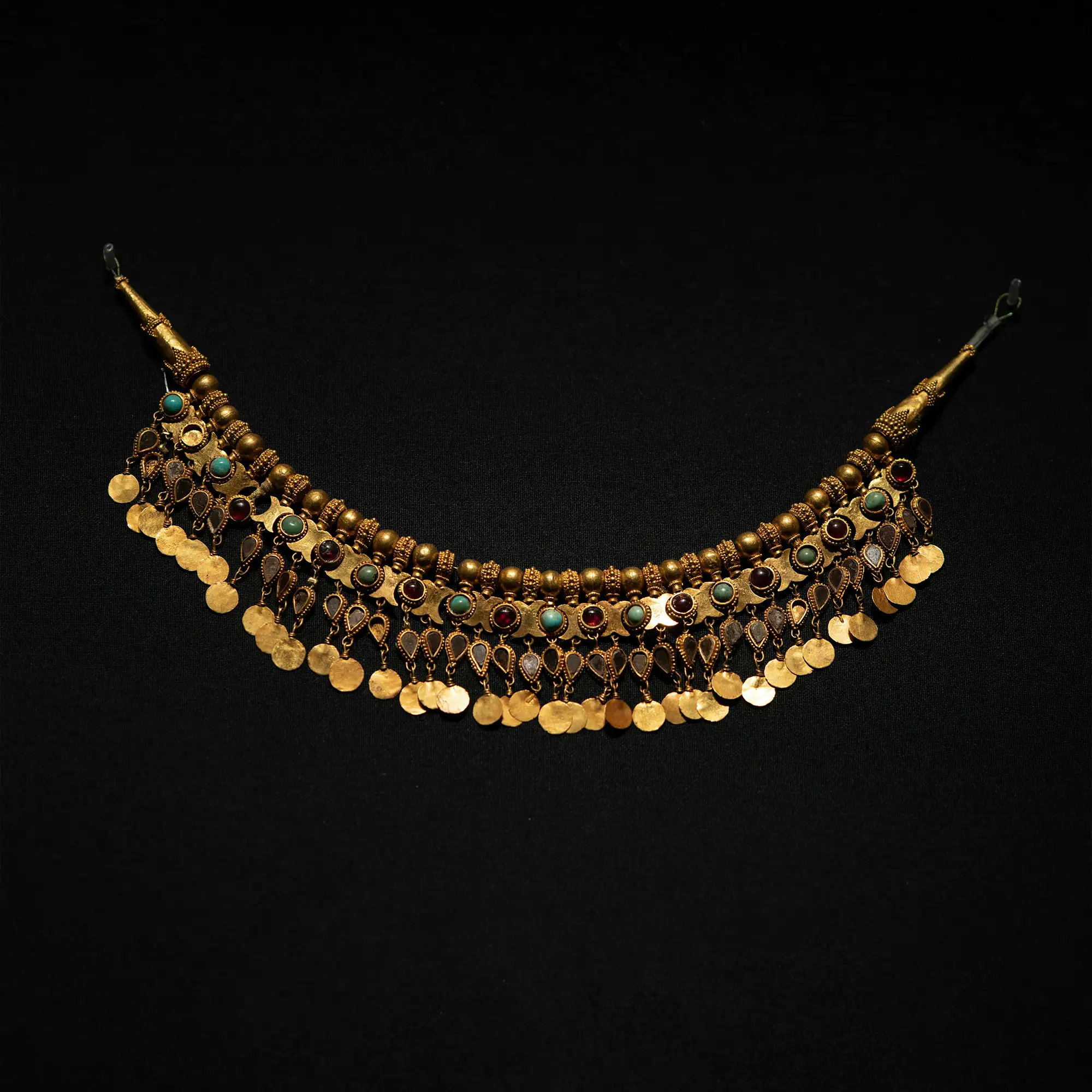
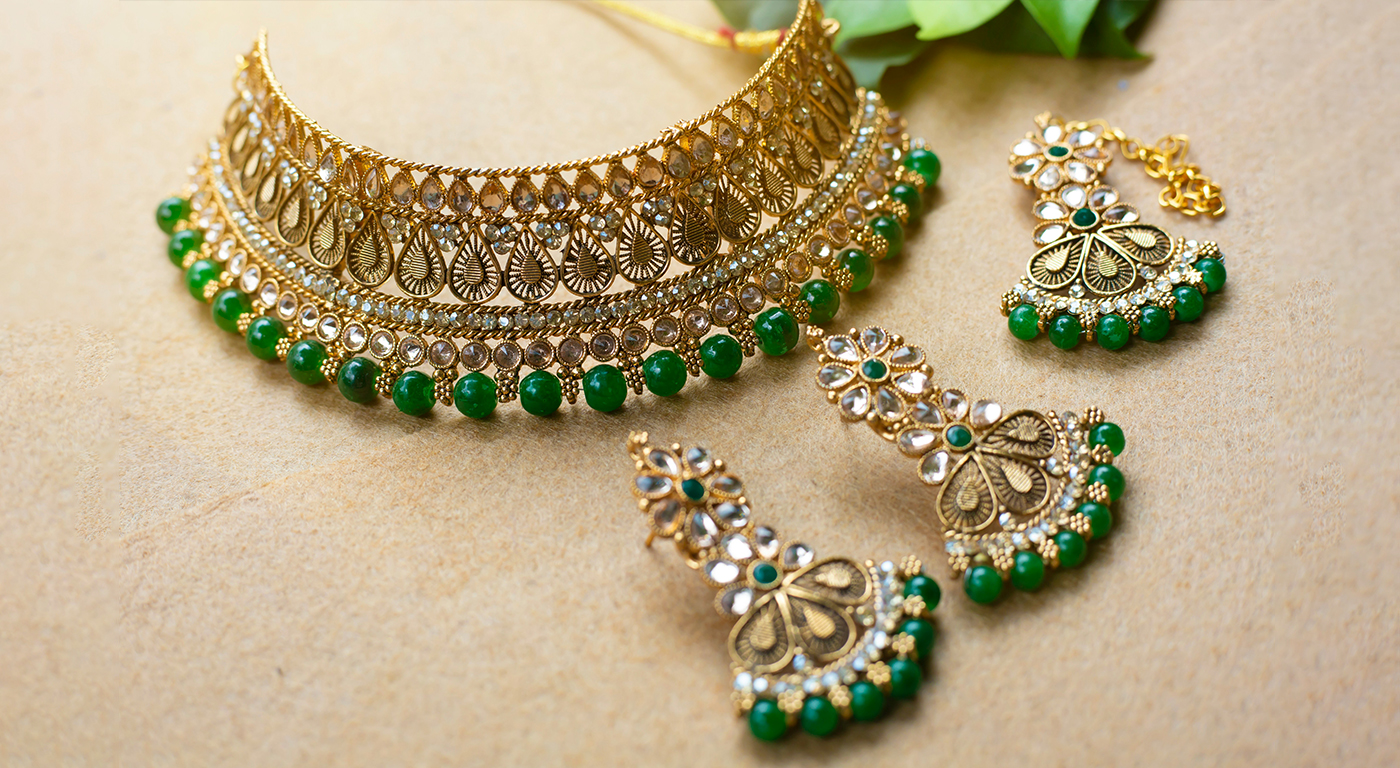
    The classic arrangement is a choker sitting snug at the base of the throat with the rani haar falling well below it, and a clear gap of skin between the two. That gap is the whole trick. Without it the two pieces merge into a single undifferentiated mass of gold and the effect collapses.

    If you are layering three pieces, make sure each length is genuinely distinct — not two that are nearly the same with one outlier. And let one piece be the loudest. Three equally elaborate necklaces do not add up to three times the impact; they add up to noise.

    Balancing the rest of the face

    A heavy haar pulls the eye down. If your earrings are also large and your tikka is also large, there is no rest anywhere and everything competes. Long jhumkis next to a wide multi-layer haar is the most common version of this problem — the two occupy the same space and neither wins.

    A practical rule: if the haar is the star, keep the earrings closer to the ear. Studs or compact jhumkis leave room for the necklace to do its work.

    Ceremony to reception

    Many brides wear the fullest version for the ceremony and then strip back for the reception — the haar comes off, the choker stays, the earrings change. It is the same jewellery working harder, and it means the reception look is not simply a tired version of the ceremony look.

    The reverse also works. A simpler ceremony and a dramatic reception is an entirely legitimate choice, and it has the practical advantage that you are not carrying maximum weight through the longest and most physical part of the day.

    The weight is real

    A substantial rani haar is heavy, and the weight lands on the back of your neck. Wear it for a while when you try it, not just for a moment in front of the mirror. If you know your hair is going up, try it with your hair up — a heavy clasp against a bare neck feels different than one cushioned by hair.

    Come and try

    Chura, nath, jhumkis and haars are all pieces that reward being seen in person — the weight, the drape, the way the stones catch the light. You are welcome to come try things on at either of our boutiques: Langford in Victoria, BC (250-710-4013) or Langley, BC (778-903-7979). Call ahead if you would like us to set pieces aside for you.

  • Caring for Gold and Kundan at Home

    Caring for Gold and Kundan at Home

    Most jewellery damage is not dramatic. It is slow, it is cumulative, and it is almost always caused by well-meant cleaning. Understanding the difference between a plain gold chain and a kundan set will save you a great deal of money and regret.

    Why kundan is different

    In kundan work, stones are held by highly refined gold foil pressed around them, not by claws or a bezel in the way a modern ring holds a diamond. Many pieces also use lac — a natural resin — as a base beneath the setting. That construction is what gives kundan its particular look, and it is also what makes it vulnerable.

    Lac softens with heat. Foil settings lift if you work at them. Water can get behind a stone and stay there. None of this is a flaw; it is simply how the technique works, and it means kundan asks for gentler handling than a solid gold bangle does.

    What to avoid

    • Ultrasonic cleaners. The vibration is exactly what a foil setting cannot survive. Never put kundan or polki in one.
    • Steam and hot water. Heat and lac do not get along.
    • Soaking. Water trapped behind a foil-set stone will dull it from underneath and you will not be able to reach it.
    • Commercial jewellery dips. Formulated for plain metal, not for foil, lac, pearls, or enamel.
    • Toothpaste and baking soda. Both are abrasives. They will scratch gold, and they will do worse to a soft stone.

    What to actually do

    For kundan and polki, a dry, soft cloth is most of the answer. Wipe the piece gently after wearing it to lift off skin oils and any residue from perfume or makeup, and pay attention to the back of the setting where it sits against skin. If something needs more than a dry cloth, that is a conversation with a jeweller, not a project for the kitchen sink.

    Plain gold with no stones is more forgiving. Warm water, a drop of mild dish soap, a soft brush, then dry it completely. Completely matters — moisture left in a clasp or a crevice is how tarnish and grime start.

    Storage does more work than cleaning

    The order of operations on any day you wear jewellery should be: makeup, perfume, hairspray, and then jewellery, last. Reverse that and you are spraying solvents directly onto foil settings.

    Store pieces individually. Gold is soft, and jewellery jumbled together in one box scratches itself. Soft pouches or a partitioned box, each piece in its own space, away from heat and direct sunlight. If a piece came in a fitted box, that box was made for it — use it.

    Take jewellery off before swimming, showering, sleeping, and anything strenuous. Chlorine is genuinely damaging, and a chura or bangle knocked against a hard edge is how stones come loose.

    When to bring it in

    If a stone moves when you touch it, stop wearing the piece. A loose stone is a lost stone, usually within a day or two, and refitting one is far easier than sourcing a replacement to match. The same goes for a clasp that has started to feel vague or a chain link that looks stretched.

    Bring anything you are unsure about to either of our boutiques — Langford in Victoria, BC (250-710-4013) or Langley, BC (778-903-7979) — and we will take a look and tell you honestly whether it needs work.

  • The Nath: Styles, Sizes, and How to Choose Yours

    The Nath: Styles, Sizes, and How to Choose Yours

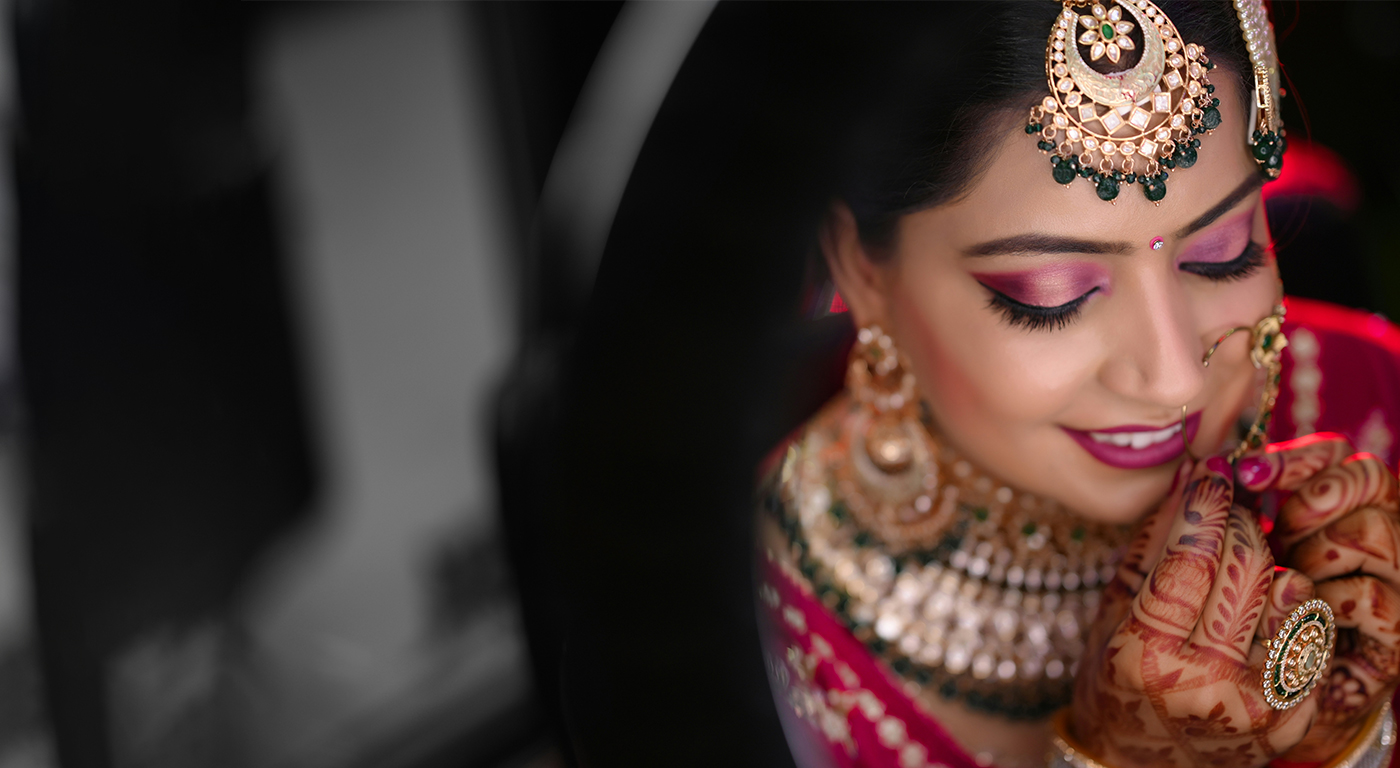
    Of all the pieces a bride wears, the nath is the one that changes a face the most. It sits at the centre of everything, it moves when you move, and it is impossible to ignore in photographs. It is also the piece brides tend to feel most uncertain about, usually because they have only ever seen naths on other people.

    The range is wider than most people realise

    At one end there is the small ring or stud — barely more than a suggestion, easy to wear, easy to forget you have on. At the other end is the large hoop, wide enough to curve past the cheek, usually supported by a chain that hooks into the hair to carry the weight. Between those two extremes sits nearly everything.

    • Ring naths — a simple circle, sometimes plain, sometimes set with small stones or pearls.
    • Chain-supported hoops — the classic bridal silhouette, where a chain takes the weight off the nostril.
    • Studded naths — a fixed stud rather than a hoop, for a much lighter look.
    • Clip and press-on styles — no piercing required, which matters more than you would think.

    You do not need a piercing

    This is worth saying plainly, because it stops people before they even start looking. Clip-on and press-on naths exist, they are common, and a well-fitted one is not obviously different from a pierced one in a photograph. If you have never been pierced and do not want to be, you have not ruled yourself out of wearing a nath.

    If you are considering a piercing specifically for the wedding, do it months in advance, not weeks. A fresh piercing is sore, it can swell, and it is not something you want to be managing on the day.

    Matching the nath to the face and the outfit

    A large hoop suits a fuller bridal look — heavy lehenga, substantial maang tikka, layered haars. Against a simpler outfit it can look unbalanced, as though it wandered in from a different wedding. A smaller ring or stud does the opposite: it holds up beautifully next to a restrained outfit and can get lost against a very heavy one.

    The other consideration is the maang tikka. Both pieces sit on the face, both draw the eye, and if both are large and busy they will fight. Usually one leads and the other supports. Decide which before you buy either.

    Weight and the long day

    A large nath pulls. The chain exists precisely because of this, and a properly hooked chain makes a genuine difference over several hours. When you try one on, leave it on for longer than feels necessary — walk around, turn your head, talk. A nath that is comfortable for thirty seconds in front of a mirror is not the same as one that is comfortable at hour six.

    Come and try

    Chura, nath, jhumkis and haars are all pieces that reward being seen in person — the weight, the drape, the way the stones catch the light. You are welcome to come try things on at either of our boutiques: Langford in Victoria, BC (250-710-4013) or Langley, BC (778-903-7979). Call ahead if you would like us to set pieces aside for you.

  • Choosing Your Bridal Chura: What to Look For

    Choosing Your Bridal Chura: What to Look For

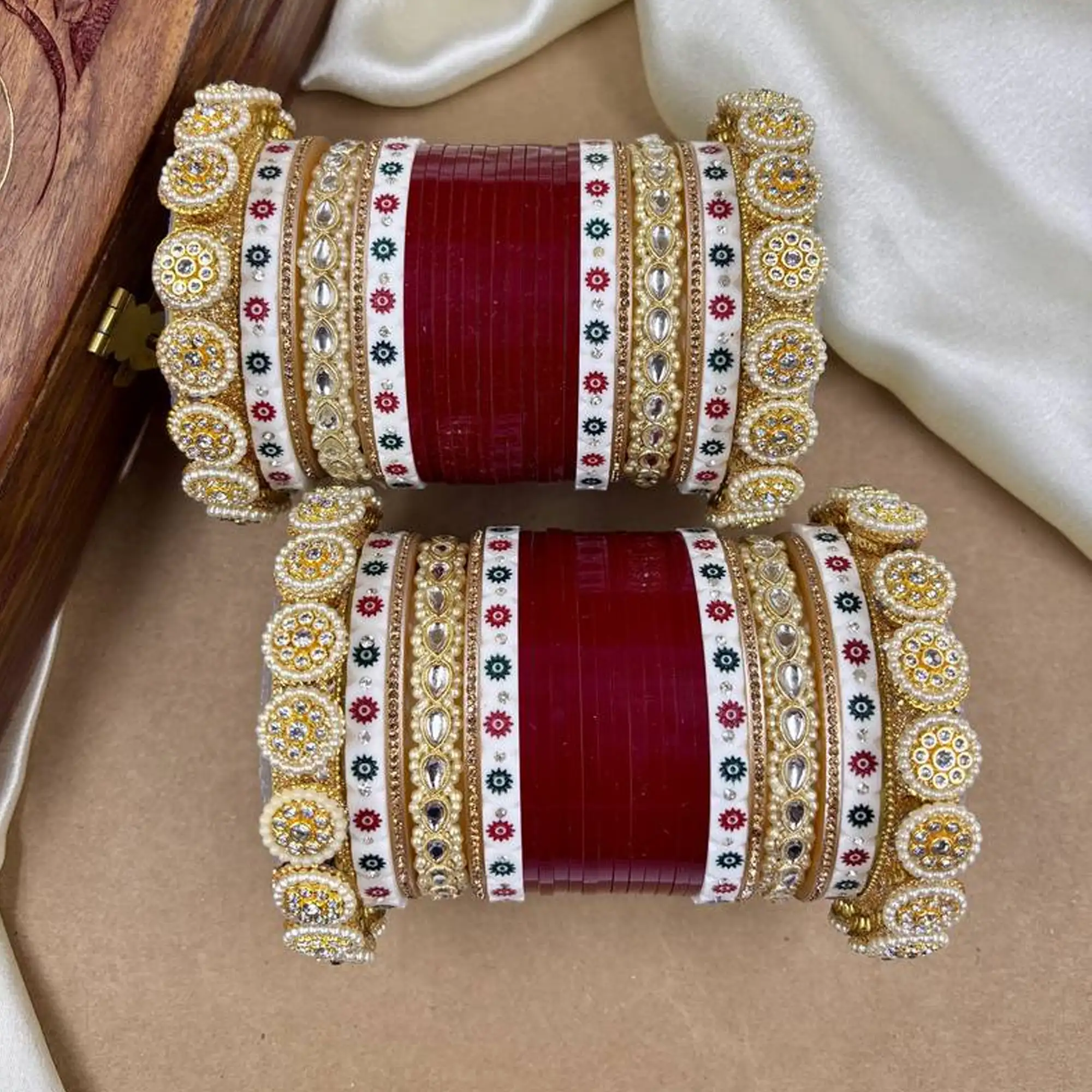
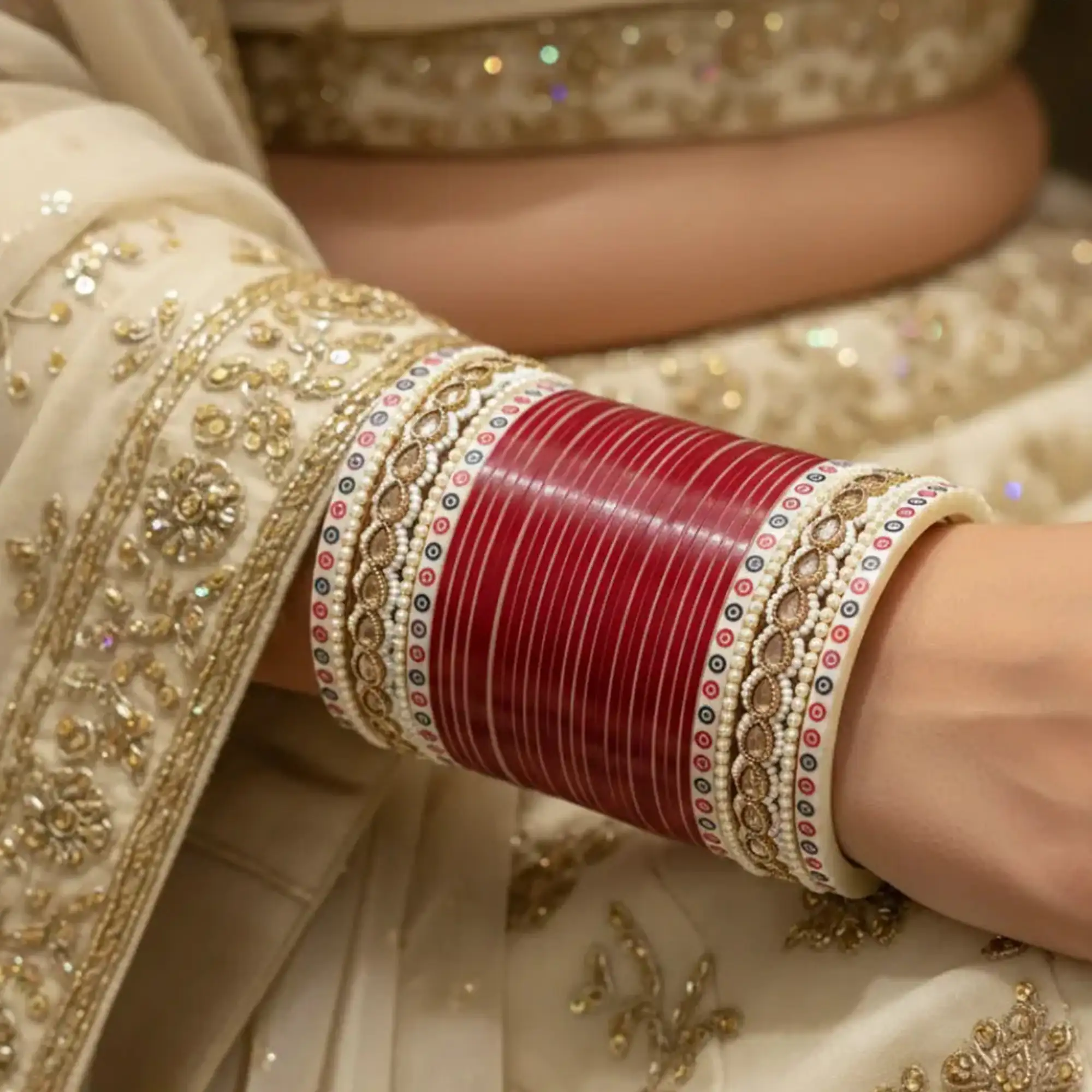
    The chura is one of the few pieces of bridal jewellery you will wear continuously, for hours on end and often for weeks afterward. That single fact should shape how you choose it. A chura that photographs beautifully but bites into your wrist by the third hour is the wrong chura, however lovely it looked on the shelf.

    Here is what actually matters when you are choosing.

    Colour is more flexible than you think

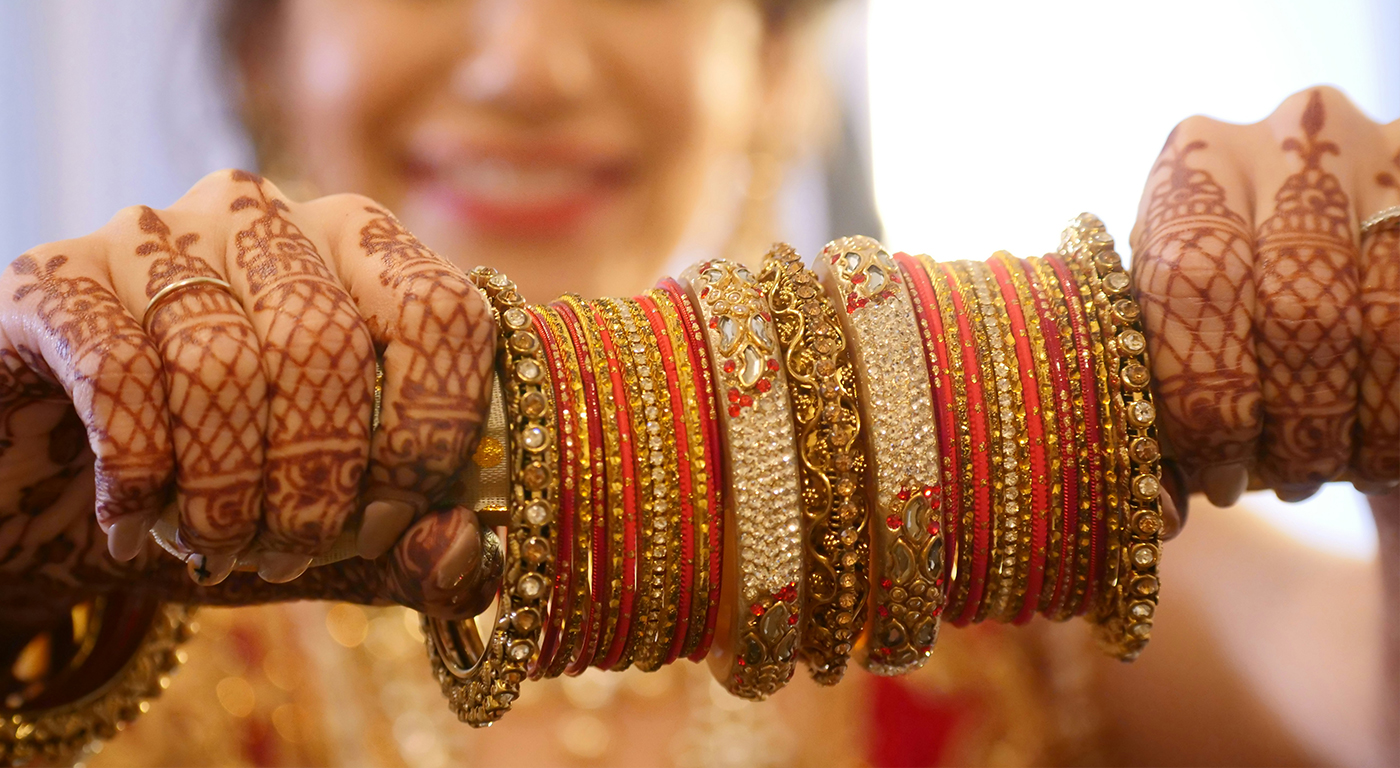
    Red and white is the combination most people picture, and it is still the most requested. But there is no rule that binds you to it. Maroon, deep coral, blush pink, ivory, and even pastel churas have all become common, and a chura does not have to match your lehenga exactly — it has to sit well beside it.

    If your outfit is heavily worked in gold, a slightly deeper red keeps the chura from competing with the embroidery. If your lehenga is a softer shade, ivory or pale pink tends to read more elegantly than a hard red. Bring a swatch or a clear photo of your outfit when you come to look. Screens lie about colour; fabric next to bangle does not.

    Count and arrangement

    Churas come in sets, and the number of bangles per arm varies by family tradition and by how much coverage you want up the forearm. More bangles means more presence, more sound, and more weight. Fewer means easier movement and a lighter feel through a long day.

    A common approach is to graduate the sizes so the set tapers along the arm rather than sitting as a uniform block. If you are unsure, try a fuller set and a lighter set on the same arm, back to back. The difference is immediately obvious on your own wrist in a way it never is in a photo.

    Fit is the part people get wrong

    This is the single most common regret we hear about. A chura that is too tight cannot be adjusted once you are wearing it, and a chura that is too loose will slide over your hand and spin, which is both distracting and a real risk of damage.

    Measure the widest part of your hand, not your wrist — the bangle has to pass over your knuckles. Many brides size down thinking it should look snug and then spend the day in genuine discomfort. Get measured properly, and if you are between sizes, consider which direction your hands tend to swell; heat, salt, and a long day on your feet all push in the same direction.

    A short FAQ

    • How far ahead should I order? Sooner than you think, especially if you want a customised set. Customisation takes time, and the weeks before a wedding are the worst possible time to be waiting on a piece.
    • Can a chura be customised? Yes — colour, stonework, and the arrangement of the set can all be adapted. Ask when you come in.
    • How long is a chura traditionally worn? This varies a great deal by family and region, from a few days to several months. It is a family decision, not a fixed rule.
    • Can I wear a chura if I am not the bride? Nothing stops you. Lighter, non-bridal sets are worn for all sorts of occasions.

    Come and try

    Chura, nath, jhumkis and haars are all pieces that reward being seen in person — the weight, the drape, the way the stones catch the light. You are welcome to come try things on at either of our boutiques: Langford in Victoria, BC (250-710-4013) or Langley, BC (778-903-7979). Call ahead if you would like us to set pieces aside for you.